Overview
Pétanque is a traditional French target-tossing boules game that originated in Provence in 1907. Players standing inside a small circle with both feet firmly on the ground throw heavy metal hollow spheres toward a small wooden target ball (cochonnet or but), attempting to place their boules closer to the target than the opposing side. It is France's most widely practiced traditional leisure sport and is inscribed on France's National Inventory of Intangible Cultural Heritage.
Origin & Region
Developed in June 1907 in the Mediterranean port town of La Ciotat near Marseille by café proprietor Ernest Pitiot to accommodate former jeu provençal champion Jules Le Noir, whose severe rheumatism prevented the multi-step running approach (les trois pas). The name derives from the Provençal Occitan expression pèd tanca (meaning "feet planted/anchored"). First codified in 1910, formalized nationally under the FFPJP in 1945, and inscribed in the National Inventory of Intangible Cultural Heritage in 2012.
Players & Materials
- Players: 1 against 1 (tête-à-tête, 3 boules each), 2 against 2 (doublette, 3 boules each), or 3 against 3 (triplette, 2 boules each).
- Equipment: Hollow metal boules approved by FFPJP/FIPJP (diameter 70.5–80.0 mm, weight 650–800 g); one wooden or synthetic target jack (but, cochonnet, or bouchon, diameter 30 mm).
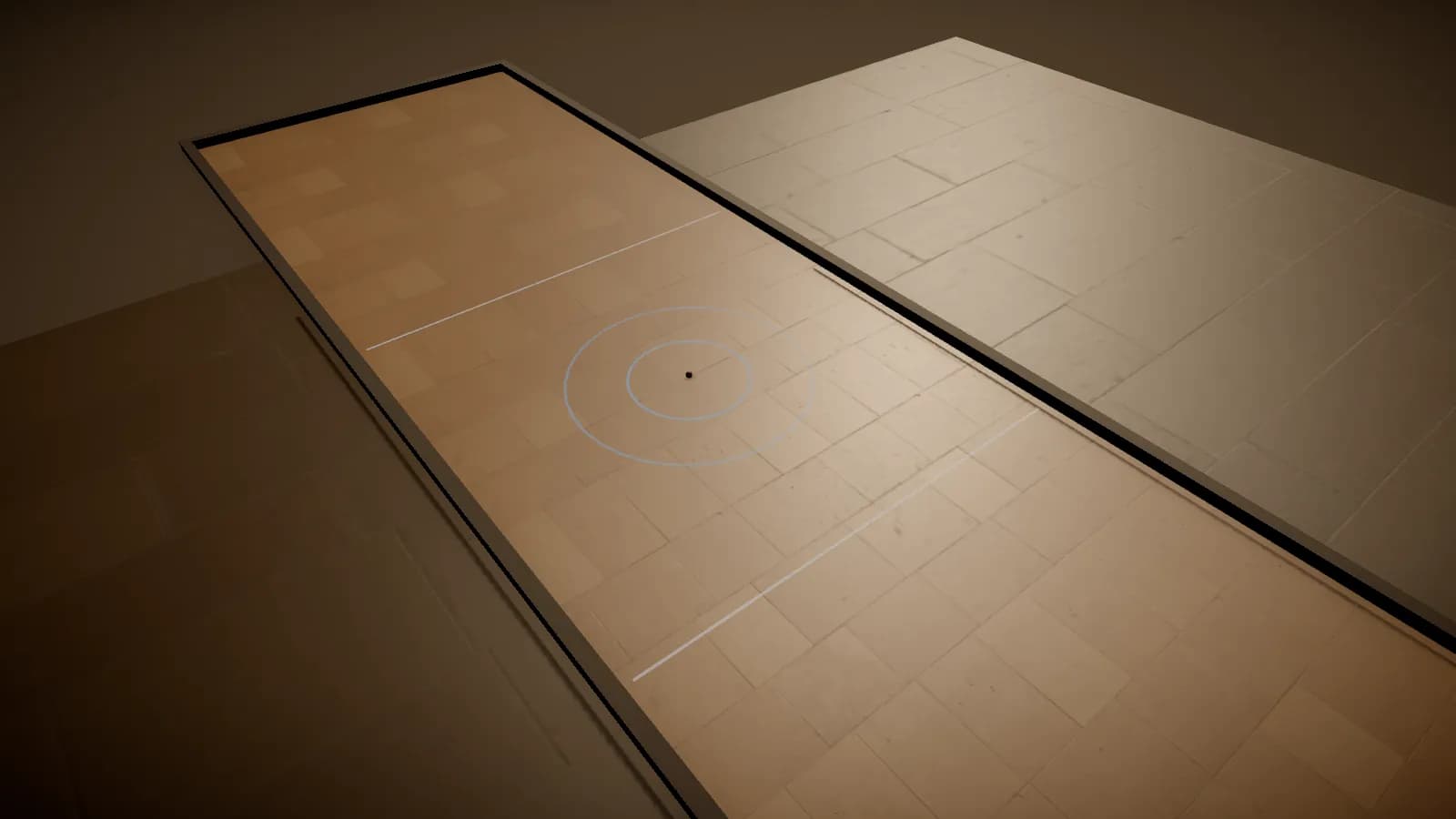
- Playing space: Compacted gravel, dirt, or crushed limestone pitch (terrain), minimum 12 m by 3 m (or 15 m by 4 m for national competitions). A throwing circle 50 cm in diameter is marked on the ground.
Objective
Be the first team to reach 13 points across successive ends (mènes) by having one or more boules closer to the target jack than the opposing team's closest boule.
Rules
50 cm diameter circle is traced at least 1 meter from any boundary or obstacle.
The team winning the opening coin toss chooses the starting circle and throws the target jack (cochonnet) between 6 and 10 meters away, at least 1 meter from any obstacle.
The first player throws their first boule from within the circle, keeping both feet completely inside and touching the ground until the boule strikes the ground.
A player from the opposing team then throws their first boule.
The team whose best boule is furthest from the cochonnet (or has no boule in play) must continue throwing until they place a boule closer than the opponent's best boule, or until they run out of boules.
Players may either place their boule carefully near the jack (pointer) or strike an opponent's boule or the jack away at high speed (tirer).
When all boules from both teams have been thrown (completing a mène), scoring occurs: the team with the boule closest to the jack scores 1 point for that boule plus 1 point for every other boule they have closer to the jack than the opponent's closest boule.
The winning team of the end marks the score, draws a new circle centered on the previous jack location (or moves back if insufficient space), throws the jack, and begins the next end.
Play continues end by end until one team reaches 13 points.
Variants
- Jeu Provençal (La Longue): The direct ancestor of Pétanque, played on longer terrain (15–21 m) where throwers must take a running three-step stride before releasing the boule.
- Pétanque en tête-à-tête: Individual duel where each competitor controls 3 boules.
- Tir de précision: Standardized individual shooting contest over fixed distances and target layouts.
Cultural Notes
Pétanque embodies French village sociability, informal café life, and summer holiday culture (l'art de vivre méditerranéen). It is traditionally accompanied by pastis aperitifs and lighthearted banter (galéjade). When a team loses 13–0 without scoring a single point, they are said to fanny (kiss the buttocks of a traditional folk effigy named Fanny).
Sources
- [Local-language] Règlement de Jeu Officiel de Pétanque — Fédération Française de Pétanque et de Jeu Provençal (FFPJP). Language:
fr. https://ffpjp.org/ Accessed 2026-08-15. Type: national-federation. Notes: Official sporting regulations, boule dimensions, circle constraints, and scoring rules. - [Local-language] Fiche d'inventaire du Patrimoine Culturel Immatériel: La Pétanque — Ministère de la Culture. Language:
fr. https://www.culture.gouv.fr/Thematiques/Patrimoine-culturel-immateriel Accessed 2026-08-15. Type: national-archive. Notes: Historical genesis in La Ciotat, Provençal linguistic origins (pèd tanca), and social transmission. - [Local-language] Histoire de la Pétanque et du Jeu Provençal — Musée National du Sport (Nice). Language:
fr. Accessed 2026-08-15. Type: state-museum. Notes: Transition from Jeu Provençal to modern anchored-feet rules.