Overview
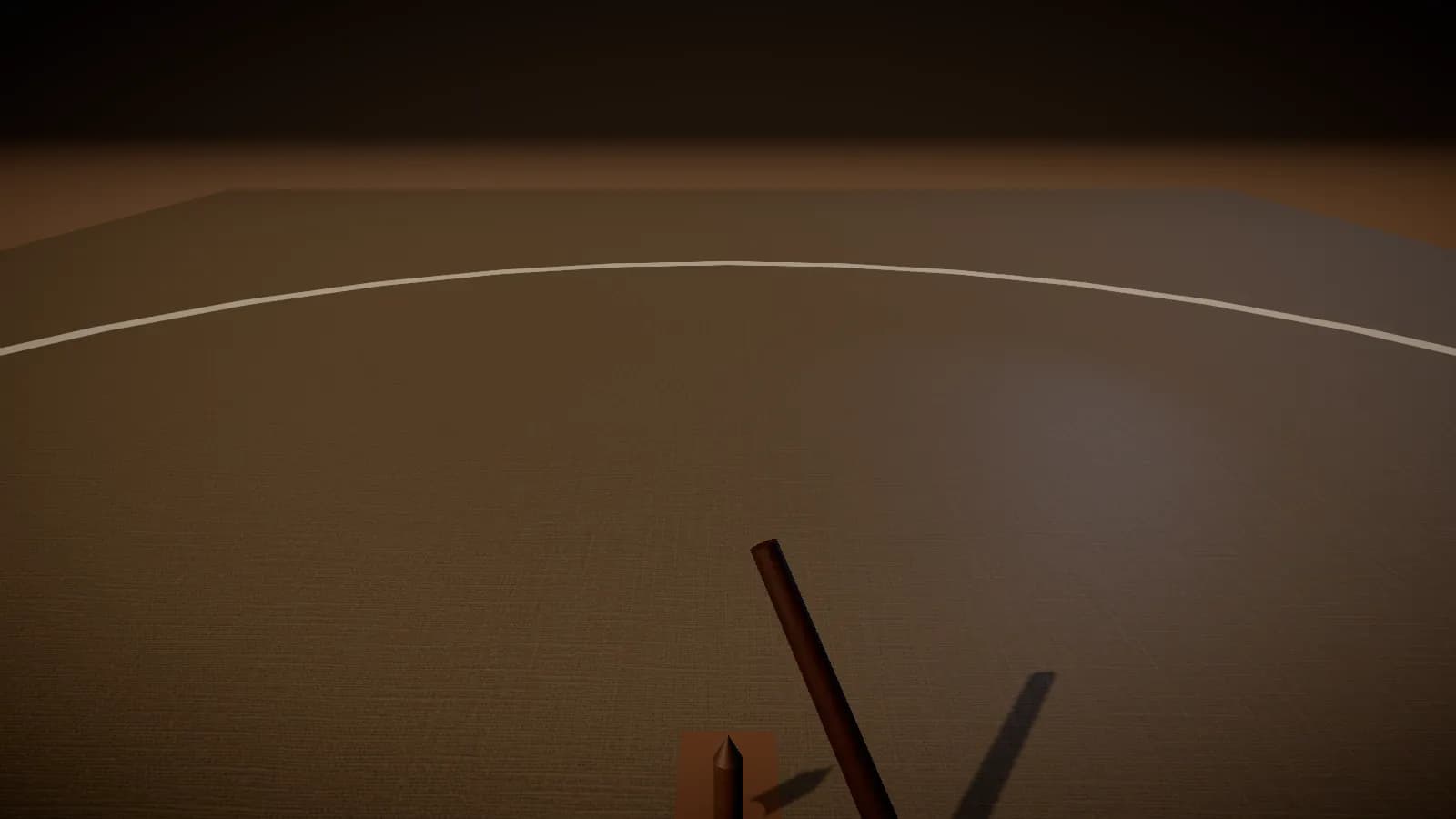
Gilli-Danda is an ancient Indian tip-cat street and field game played with two hand-carved wooden implements: a long striking bat (danda) and a short oval wooden peg tapered at both ends (gilli). The batter levers or flips the gilli into the air from a small ground trench and strikes it with the danda into the outfield, scoring points based on the distance the gilli travels, measured in lengths of the danda.
Origin & Region
Attested in classical Sanskrit folklore and early literary texts for over 2,500 years; cited in the Mahabharata where the young Pandava and Kaurava princes play the game in Hastinapura and lose their gilli in a deep well, retrieved by Dronacharya using grass blades. Known under numerous regional names across India: Viti-Dandu (Maharashtra), Chinni Dandu (Karnataka), Kitti Pullu (Tamil Nadu), Chirra Gone (Andhra/Telangana), Dangguli (Bengal), and Kuttiyum Kolum (Kerala).
Players & Materials
- Players: 2 individual players or 2 opposing teams (typically 3 to 6 players per side)
- Equipment:
- Danda (or Dandu / Kolu): Cylindrical wooden stick/bat, length approx. 45–60 cm (1.5–2.0 ft), diameter 2.5–3.5 cm
- Gilli (or Viti / Chinni / Kutti): Short spindle-shaped wooden peg, length approx. 10–12 cm (4–5 inches), diameter 2.5 cm, tapered to sharp points at both ends
- Playing space: Open dirt ground, field, or rural street; a small elongated oval trench (Guchhi / Khutti / Kodu / Kuzi), approx. 10–15 cm long and 3–5 cm deep, is carved into the earth as the base
Objective
Score the highest cumulative points by striking the airborne gilli as far as possible from the base trench and accumulating measured danda-length distances before being caught out, struck out, or failing a strike.
Rules
coin toss or distance-measuring test determines the initial striking player/team and fielding side.
The striker places the gilli across or inside the ground trench (guchhi).
Phase 1 (The Flick / Launch): 3.1. The striker inserts the tip of the danda beneath the gilli and levers/flicks it forcefully upwards and forwards into the outfield. 3.2. If any fielding player catches the flying gilli in mid-air before it touches the ground, the striker is instantly "Out", and the turn passes to the next player/team.
Phase 2 (The Target Throw): 4.1. If the gilli hits the ground uncaught, the striker lays the danda horizontally across the trench. 4.2. A fielder retrieves the gilli from where it landed and throws it back towards the trench, attempting to strike the resting danda. 4.3. If the thrown gilli hits the danda or lands directly inside the trench, the striker is "Out".
Phase 3 (Tip-and-Strike / Tola): 5.1. If the thrown gilli misses the danda, the striker steps to the spot where the gilli lies on the ground. 5.2. The striker taps the tapered end of the gilli with the danda so that the peg flips up spinning into the air. 5.3. While the gilli is airborne, the striker swings the danda to hit it as far as possible into the outfield. (In traditional rules, the striker may juggle/re-tap the gilli up to 3 times in the air to gain height before the final forward strike). 5.4. If the striker swings and misses the airborne gilli entirely (3 failed attempts), the striker is "Out". 5.5. If the struck gilli is caught in mid-air by a fielder, the striker is "Out".
Phase 4 (Scoring and Measurement): 6.1. If the gilli lands safely in the outfield, the striker estimates or claims a distance in danda-lengths from the base trench to the gilli's resting point. 6.2. The distance is measured continuously using the danda as the measuring unit (end-to-end stick lengths). 6.3. Each full danda-length equals 1 point for the striker. 6.4. In traditional scoring systems, specific score names apply to each multiplier: 1 (danda), 2 (samar), 3 (leera), 4 (doka), 5 (vishe), 6 (parath), 7 (naath).
The striker continues taking turns at the trench until eliminated.
Once all players of the batting side are out, the fielding side takes their turn to bat. The team with the highest point total wins.
Variants
- Viti-Dandu (Maharashtra): Played with specific scoring penalties where the losing team must give a "ride" (dhobi) or retrieve the viti over long distances on one leg (langdi).
- Chinni Dandu (Karnataka): Features specialized strike styles (Pillu, Kallu) with distinct finger-grip placements.
- Kuttiyum Kolum (Kerala): Played with regional measurement chants and strict field-boundary penalty lines.
Cultural Notes
Gilli-Danda is an enduring cultural icon of Indian rural youth, immortalized in Hindi literature by Munshi Premchand's famous short story "Gilli-Danda" (which reflects upon the innocence of childhood play compared to modern commercial sports). It is widely regarded as a traditional predecessor to batting and fielding games across Asia.
Content Advisories
- injury-risk: Flying wooden projectile (gilli) with tapered ends traveling at high speed, presenting risk of eye or facial injury to fielders and bystanders.
Sources
- [Local-language] Gilli-Danda Khel aur Sanskriti — Indian Culture Portal / Ministry of Culture. Language:
hi. https://indiaculture.gov.in. Accessed 2026-08-15. Type: national-ministry. Notes: historical lineage from Mahabharata, equipment specifications, and rural scoring systems. - [Local-language] Viti-Dandu Khel: Niyam ani Khelane — Maharashtra Rajya Marathi Vishwakosh. Language:
mr. https://marathivishwakosh.org. Accessed 2026-08-15. Type: state-encyclopedia. Notes: danda measurement rules, tola aerial tapping mechanics, and target throw rules. - [English] Traditional Games of India: Gilli Danda — Sahapedia & IGNCA. Language:
en. https://www.sahapedia.org/traditional-games-of-india. Accessed 2026-08-15. Type: national-archive. Notes: pan-Indian regional naming, three-phase turn structure, and folk variations.